Dr. Gymbro
←

#heart rate variability

2 articles
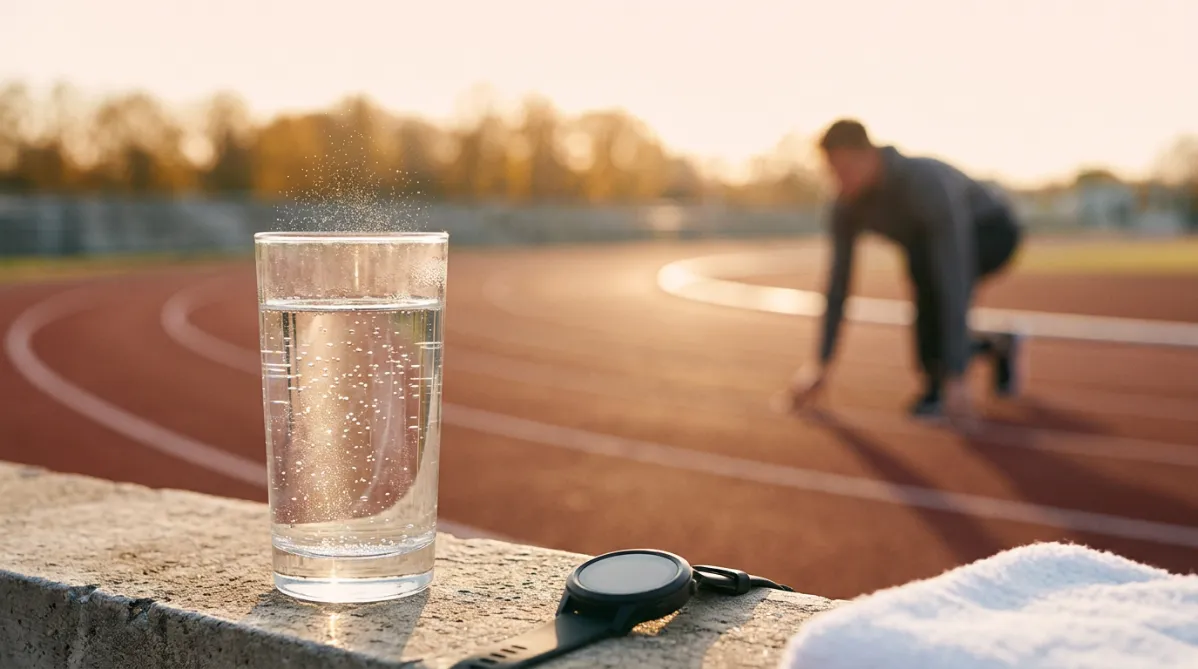
A wide, editorial-style photograph of a clear glass of water on a weathered concrete ledge at the edge of an outdoor running track, shot in soft golden-hour light. Tiny, fine bubbles cling to the inside of the glass and drift upward, catching warm backlight so the water looks luminous and crisp. The glass is about three-quarters full, with delicate condensation beading on its surface. In the softly blurred background, the curved lanes of a terracotta-red track sweep diagonally across the frame, with faint white lane lines leading toward the horizon. A lone sprinter in a charcoal athletic top crouches in a starting position, out of focus, rendered as a muted silhouette. Long shadows stretch across the track, and a hazy line of trees glows amber in the distance.

Foreground details are sharp: a matte black sports watch rests beside the glass, its screen dark, and a folded white towel sits at the edge of the frame. The palette is warm and restrained, with terracotta, sand, soft peach sky, charcoal, and the cool, clean glint of water as the focal accent. Shallow depth of field, 85mm lens look, fine film grain, gentle natural lens flare from the low sun. The composition follows the rule of thirds, with the glass placed on the left third and generous negative space on the right for headline text. The mood is calm, athletic, and modern, like a contemporary health and performance magazine cover, with no text, logos, or futuristic elements.
science research

Водородная вода перед спринтами: сила сохраняется, а восстановление ускоряется

BY DR. GYMBRO ·

Стакан (280 мл) водородной воды, выпитый за минуту до усилий, позволил спортсменам сохранить более высокий уровень мощности в кросс‑спортивном исследовании. После тренировок они быстрее восстанавливали вариабельность сердечного ритма, а концентрация лактата в крови через 3 минуты была примерно на 1 ммоль/л ниже. Однако в эксперименте участвовало лишь 13 мужчин, он был односторонне слепым и проверял лишь одну острую дозу. Ниже — что именно исследовали, как это делали, кому может быть полезно и почему стоит сохранять скепсис.

A wide, editorial-style still life photographed on a pale warm-gray concrete surface in soft, diffused morning window light. On the left side, a tall clear glass filled with deep magenta-crimson beetroot juice sits beside two halved raw beetroots, their concentric rings of vivid fuchsia and purple clearly visible, with a few small green-and-red-veined leaves draped casually nearby. On the right side, a matching clear glass of cloudy white creatine solution rests next to a small matte ceramic bowl heaped with fine white powder and a minimal wooden scoop, a light dusting of powder scattered across the surface. In the center, between the two sides, a simple matte black barbell grip and a single chalk-dusted weight plate edge rise into the frame at a low angle, hinting at lifting without showing a person. The composition is split in a balanced, symmetrical way, with a subtle vertical shadow line dividing the saturated magenta tones on the left from cool, neutral whites and creams on the right. The background is softly blurred with a muted sage-green and oatmeal-toned wall, with plenty of negative space at the top for a headline overlay. Shallow depth of field, crisp focus on the glasses' condensation droplets and the textured beetroot flesh. The color palette is limited and refined: magenta, cream, charcoal, and soft sage. The mood is clean, modern, and health-journal chic, like a contemporary wellness magazine cover, with natural shadows, a tactile matte finish, and subtle film-like grain. No text, no logos, no futuristic elements.
nutrition

Свекольный сок vs креатин: кто победит в силовых тренировках за 72 часа?

BY DR. GYMBRO ·

В рандомизированном перекрёстном исследовании сравнивали влияние свекольного сока и креатина в течение примерно 72 часов у новичков‑тренеров. Креатин оказался более эффективным для количества повторений жима лёжа при 80 % от 1 ПМ, тогда как свекольный сок превзошёл его в скорости штанги, мышечной оксигенации, пиковом пульсе и восстановлении по HRV. Дозировки и режим приёма в аннотации не указаны, поэтому отмечаем недостающие данные. Ниже – полная оценка результатов и рекомендации, какой препарат выбрать.

This page is available in